Design as Negotiation
a reflection on the cost of aesthetic control and the value of working with, not against, materials.
1/13/20263 min read


To be a great designer is to be a great negotiator—a mediator between intention and material. Every material has its own will: its behavior, its limits, and its consequences. I arrive with my own ambitions and ideas. Design happens in the space where these two wills meet, where compromise gives rise to something neither could achieve alone.
Contemporary design culture, however, has shifted this balance. We have grown accustomed to making anything we can imagine. With modern manufacturing, there is no shape, material, size, or finish out of reach. When a material resists, we engineer around it. When it degrades, we coat it. When it is toxic, we push the harm downstream. In prioritizing aesthetic perfection and immediate performance, we often silence the material’s voice entirely.
This pursuit of visual novelty and frictionless convenience has come at a profound environmental cost. Materials are selected not for their health, renewability, or ability to return safely to the earth, but for how closely they align with a desired appearance. Plastics replace wood, composites replace single materials, and finishes are layered until objects become impossible to repair, recycle, or decompose. What appears clean and minimal on the surface often conceals extraction, pollution, and waste across its entire lifespan.
In losing the art of compromise, we have also lost restraint. True wonder in design does not come from total control, but from listening—allowing materials to guide form, accepting imperfection, and working within natural limits rather than in spite of them. When we relinquish absolute aesthetic dominance for the greater good, the work becomes not only more honest, but more responsible. The future of design depends on our willingness to negotiate again—not just with materials, but with the environment that sustains them.
I have seen this tension clearly in my own practice. Much of my frustration comes from my refusal to negotiate. I hold tightly to a vision of how something should look and will glue, shellac, paint, and mangle a material until it submits. This is where projects begin to break down. I fight the material instead of listening to it, instead of learning from it. It is only when I step back and ask what the true essence of the project is—what must remain and what can be let go—that the work begins to resolve. This is not about abandoning vision, but about identifying what you truly love about it and why. In doing so, new paths emerge—often better ones. True design, I believe, is not about breaking the box, but understanding its constraints and discovering how fully it can be inhabited.
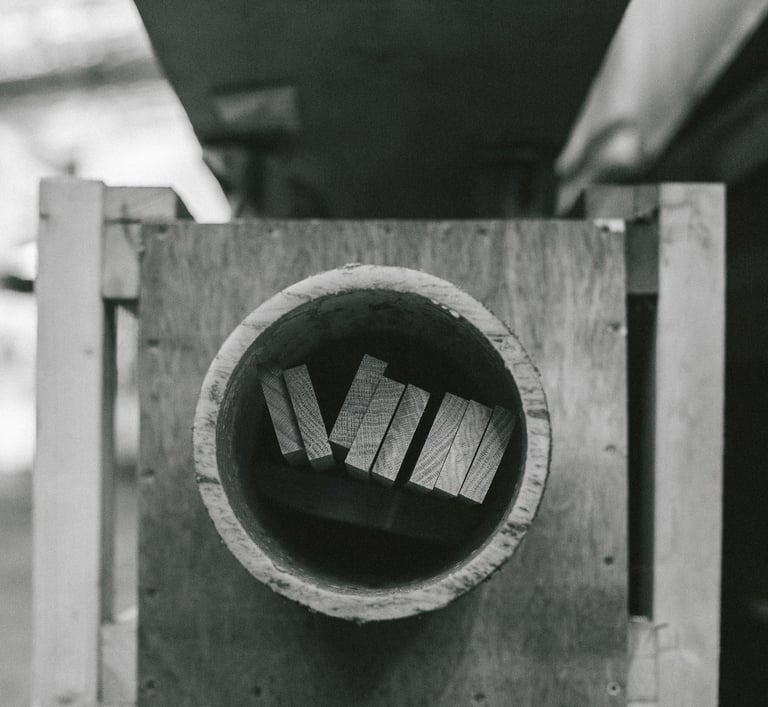
Steam-bent wood offers a clear example of this kind of material negotiation. There are many ways to bend wood, but none as honest or poetic as steam bending. The designer brings a vision; the wood brings its own. The role of the designer is to push the material to its limits—and to listen when it says stop. When wood comes out of the steamer, negotiations are immediate. There is only a brief window of pliability before it hardens again. As it bends, you can feel when it approaches failure. This knowledge does not come from books or videos, but from a deep, embodied understanding—stored in the fingertips rather than the mind.
When the wood cools, another loss of control occurs: bounceback. Laminated wood eliminates this uncertainty; it stays exactly where you force it. But that control comes at a cost. The wood is locked together with toxic adhesives, unable to decompose, destined for a landfill. Steam bending demands compromise. You lose precision, but you gain a relationship. The material remains whole, honest, and healthy because of it.
This is the negotiation design must return to. One where control is traded for care, perfection for longevity, and dominance for dialogue. In listening to materials, we are ultimately listening to the systems they come from. And in doing so, we create objects that do not just exist beautifully in the world—but belong to it.